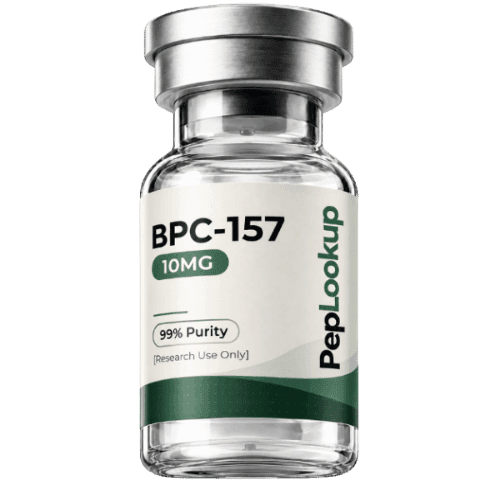
BPC-157 is a synthetic pentadecapeptide derived from a protective protein found in gastric juice. It is studied for tendon, ligament, muscle and gut tissue repair, and for anti-inflammatory and neuroprotective activity. It is not approved for human use.
BPC-157 is a synthetic pentadecapeptide derived from a protective protein found in gastric juice. It is studied for tendon, ligament, muscle and gut tissue repair, and for anti-inflammatory and neuroprotective activity. It is not approved for human use.
Tissue Repair
Gut Health
Tendon Recovery
Anti-Inflammatory
Muscle Recovery
What the research reports
Reported benefits of BPC-157
Outcomes described across the published BPC-157 literature and ongoing study. Read each as research context rather than a promised personal result.
01
Soft tissue and tendon repair
Studied for tendon, ligament and muscle healing, with animal models reporting faster fibroblast outgrowth after induced injury. Reported in research settings.
02
Gut and gastric lining support
Originally isolated from gastric juice and studied in models of ulceration, colitis and chemically induced intestinal damage. Reported in research settings.
03
Angiogenesis and blood flow
Animal models report promotion of new blood vessel formation and collateral circulation, helping nutrients reach injured tissue faster during healing.
04
Anti-inflammatory signalling
Preclinical studies describe reduced inflammatory markers and lower oxidative stress in injured tissue, alongside modulation of nitric oxide pathways.
05
Post-injury recovery research
Case series in knee pain and interstitial cystitis reported symptom improvement, although none of the human work published to date was randomised or placebo controlled.
Clinical evidence
BPC-157 clinical evidence summary
The published BPC-157 record, labeled by strength so you can see what is settled and what is still emerging.
Knee pain case series, 2021
Lee and Padgett reported that 14 of 16 patients (87.5%) who completed follow-up had relief from knee pain after treatment with BPC-157 alone or combined with TB-500 (thymosin beta-4), with follow-up extending up to one year. Reported in the cited paper.
A 2024 pilot case series of 12 patients found a single 10 mg intravesical injection resolved interstitial cystitis symptoms in 10 of them with no adverse events.
A 2025 pilot in two healthy adults reported that intravenous infusion of 10 mg on day one and 20 mg on day two was well tolerated, with no adverse effects recorded by the authors. Reported in the cited paper.
Synergistic for tissue repair. BPC-157 drives angiogenesis while TB-500 modulates actin and cell migration.
GHK-Cu peptide
Synergistic for tissue remodelling. Both support wound healing through separate biological mechanisms.
Semaglutide
No known negative interaction. May support gut comfort during GLP-1 therapy through a different mechanism.
Ipamorelin
No known negative interaction. Different primary targets, and the two are often combined in clinic settings.
Questions
Frequently asked questions.
What is BPC-157?
BPC-157 (also listed as Body Protection Compound-157 or PL 14736) is a research compound that PepLookup files under Healing, Tissue Repair. It is not approved for human use, and every listing on this page is sold for laboratory research only.
How many suppliers sell BPC-157?
We track 140 BPC-157 listings from 80 suppliers, and 132 were in stock at our last check.
What sizes does BPC-157 come in?
Single vials on this page run from 0.5 mg to 20 mg, and 20 listings are kits of several vials. Price per mg puts every size on the same scale, so a larger vial isn't automatically the better deal.
Do BPC-157 listings come with COAs?
102 of the 140 listings link a certificate of analysis. A COA covers one batch, so check that its lot number matches the vial you receive.
Where is BPC-157 cheapest?
At our last check the lowest in-stock price per mg was at ZC Labs. Prices change often, so the table above, sorted by price per mg, shows the current order.